← orlandu.com
TRINITRON FLEET · VOL.1 · AUG 2026
Format
Vol. 1 · August 2026 · Orange County, California

TRINITRONFLEET

Eight models, thirteen units, and one tube that can never be replaced.

The grail

The BVM-20E1U: the only 20-inch 4:3 Sony ever built at 1000 TVL.

The cube

Twenty-nine inches of Super Trinitron, and 115 pounds of it.

Confidence wall

Five LMD-9030s and three LMD-9050s, behaving as one instrument.

Eight models · Thirteen units · Compiled August 2026 · Not for resale

In this issue

8
Models
13
Units
4
CRT
4
LCD
1000
Peak TVL
28
Spec lines

Fleet by the numbers

380lb
Fleet weight
All thirteen units on one impossible shelf
≈960W
Everything lit
Every screen in the building at once
1080sq in
Total glass
Viewable area across the whole fleet
20yrs
Engineering span
From the 1991 cube to the 2011 panels

Three decades of glass

1968 1980 1990 2000 2010
PVM-2950Q
PVM-20L5
BVM-20E1U
BVM-A14F5U
LMD 90-series
Dashed line: Trinitron debuts, 1968 · Bars from each model's production era
Trinitron Fleet · Vol.1 · Aug 2026 Trinitron CRT Page 4
01 / 05

PVM-2950Q

29" production
PVM-2950Q
PVM-2950Q

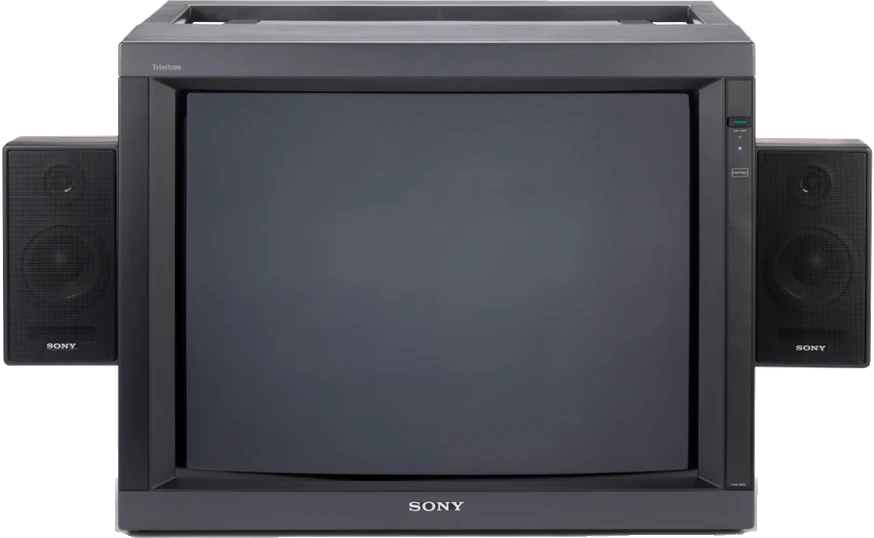
Every collection has a centerpiece, and this one announces itself before it is ever switched on. The PVM-2950Q is twenty-nine inches of Super Trinitron in a hundred-and-fifteen-pound cube — the biggest tube Sony ever committed to a production monitor, and the closest thing the format has to a monument.

Turn it on and the monument becomes a window. This is arcade-era spectacle at living-room scale: the same glass family the era's games were mastered against, blown up until sprites carry real physical weight. At 600 TVL the scanlines land soft and warm rather than surgical, and across a 27-inch face that is not a limitation — it is the original artistic intent, projected at full size.

Arcade-era spectacle at living-room scale — a monument that doubles as a window.

Sit a 16-bit console in front of it and the effect is immediate. Color snaps. Blacks fall away to nothing. Motion arrives with zero apology. NTSC, PAL, SECAM — it auto-detects and simply gets on with the job, the way broadcast hardware always did, no menus to negotiate and nothing to configure.

And here is the quietly great part: beneath the brute scale sits the most serviceable big CRT Sony ever made. Convergence and geometry live in a digital service menu — the finest implementation in the PVM class — so keeping the picture perfect decades on is a menu exercise rather than folklore. Machines this size usually demand rituals. This one just asks for a shelf strong enough to hold it.

Resolution
600 TVL
Size (viewable)
29" (27" viewable)
Horizontal sync range
15 kHz only
Grade / series
PVM production
Option slots
None — fixed inputs
Current draw
3.7 A max @ 100–120 V (165 W typ ≈ 1.4 A)
Weight (approx)
115 lb (52 kg, Sony spec)
Production era
~1991–1996
Picture8
Rarity8
Versatility6
Livability6
THE MONUMENT.
Full specification — all 28 lines
Display
Technology
Super Trinitron CRT
Size (viewable)
29" (27" viewable)
Grade / series
PVM production
Native aspect
4:3 (16:9 mode)
Resolution
600 TVL
Tube / panel detail
AG pitch 0.7–0.85 mm, 110° deflection
Phosphors / color science
Standard P22
Color temperature
3200K / 6500K / 9300K
Formats & sync
Supported formats
NTSC / PAL / SECAM / NTSC 4.43, auto-select
Horizontal sync range
15 kHz only
HD capable
No
240p handling
Native scan, soft scanlines at 600 TVL
Inputs & modularity
Composite
2× with loop-through
Y/C (S-Video)
Yes
Analog RGB / component
RGB (BNC)
SD-SDI
HD-SDI / 3G
HDMI
Option slots
None — fixed inputs
Control, power, physical
Control system
Front panel + OSD; full digital geometry/convergence in service menu
Power
AC only
Current draw
3.7 A max @ 100–120 V (165 W typ ≈ 1.4 A)
Rack / mounting
Desktop cube, stackable
Weight (approx)
115 lb (52 kg, Sony spec)
Production era
~1991–1996
Market
Desirability
Very high — largest common PVM, "the cube," freight is the barrier
Notable quirks
Corner bracket screws back out into the cube chassis; all-digital convergence is best-in-PVM-class
Role in your setup
Big-screen 240p/consumer-era display
Trinitron Fleet · Vol.1 · Aug 2026 Trinitron CRT Page 6
02 / 05

PVM-20L5

20" multiformat
PVM-20L5
PVM-20L5

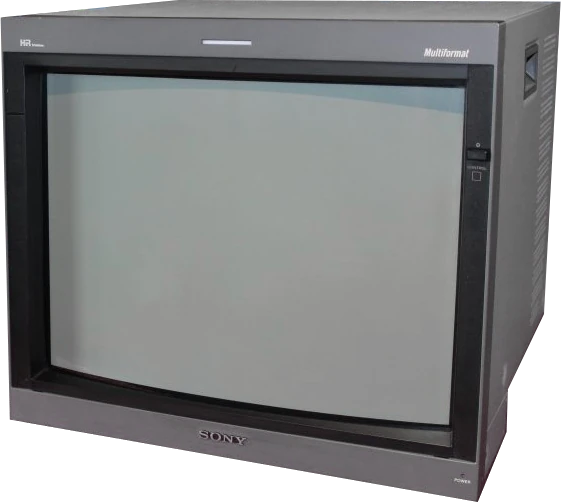
Ask around the hobby and one name keeps coming back. The 20L5 is the king of PVMs — full stop — the machine that arrived at the very end of Sony's production-monitor line with thirty years of Trinitron lessons folded into it. Plug anything into it, from any decade, and it shows why the title stuck.

The party trick is range. This is a true multiscan machine, locking anything from 15 to 33.75 kHz: a Super Nintendo at 240p, a DVD player at 480p, a broadcast feed at 1080i — same glass, same effortless lock, no option card required. One monitor that speaks every era of video fluently, which is exactly why it plays the bridge in this collection.

One monitor that speaks every era of video fluently — the bridge from 240p to HD.

At 800 TVL on SMPTE-C phosphors the picture is broadcast-honest. Colors sit precisely where the mastering engineer put them, and 240p sources take on that etched, dimensional quality only a fine-pitch HR Trinitron delivers — the look people chase for years and then refuse to give up.

The practical genius runs deeper. Inputs arrive in pairs with loop-throughs, so it drops into any chain without ceremony, and one option slot stays open — a standing invitation for SDI whenever the rack calls for it. Even the flyback is shared with the 14L5 and a BVM cousin, the kind of deep parts commonality that keeps a legend alive across decades. Kings age well when the bloodline runs deep.

Resolution
800 TVL
Size (viewable)
20" (19" viewable)
Horizontal sync range
15–33.75 kHz class multiscan
Grade / series
PVM production (top of line)
Option slots
1 (BKM-120D / 142HD / 150CP / 155DV)
Current draw
≈1.5 A @ 120 V (180 W per Sony catalog)
Weight (approx)
~73 lb
Production era
~2002–2007
Picture9
Rarity7
Versatility10
Livability8
THE BENCHMARK.
Full specification — all 28 lines
Display
Technology
HR Trinitron CRT
Size (viewable)
20" (19" viewable)
Grade / series
PVM production (top of line)
Native aspect
4:3 (16:9 switch)
Resolution
800 TVL
Tube / panel detail
Fine-pitch HR tube (shared flyback with 14L5 / BVM-D14H5)
Phosphors / color science
SMPTE-C
Color temperature
6500K / 9300K / user 3200–10000K
Formats & sync
Supported formats
240p, 480i/p, 576i/p, 1035i, 1080i, 720p
Horizontal sync range
15–33.75 kHz class multiscan
HD capable
Yes (analog + optional digital)
240p handling
Native scan, pronounced scanlines
Inputs & modularity
Composite
2× with loop-through
Y/C (S-Video)
Yes, loop-through
Analog RGB / component
1× RGB/component switchable, loop-through
SD-SDI
Optional (BKM-120D)
HD-SDI / 3G
Optional (BKM-142HD)
HDMI
Option slots
1 (BKM-120D / 142HD / 150CP / 155DV)
Control, power, physical
Control system
Front panel + OSD; parallel remote
Power
AC only
Current draw
≈1.5 A @ 120 V (180 W per Sony catalog)
Rack / mounting
Optional rack mount
Weight (approx)
~73 lb
Production era
~2002–2007
Market
Desirability
Very high — often called the king of PVMs; multiformat + 20"
Notable quirks
Early-serial D2 boards have 15 kHz H-linearity defect
Role in your setup
AMS-100 stack; multiformat bridge SD→HD
Trinitron Fleet · Vol.1 · Aug 2026 Trinitron CRT Page 8
03 / 05

BVM-20E1U

20" 1000 TVL flagship
BVM-20E1U
BVM-20E1U

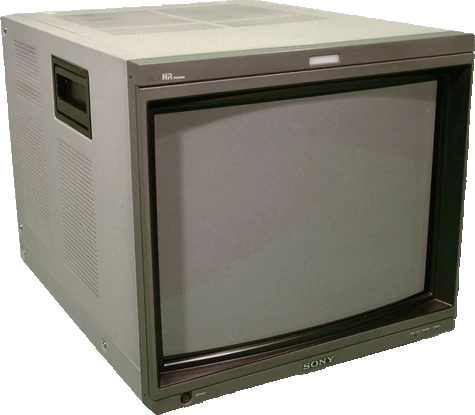
Every collector has one machine that justifies the whole pursuit. This is that machine. One thousand TVL, at twenty inches, in 4:3 — a number Sony hit exactly once, on exactly this chassis, and never again. A grail earns the name on a single specification.

Inside is the M49LCB22X, an aperture grille so fine — roughly a quarter of a millimeter — that even the tube in its celebrated successor is coarser. This is the sharpest large-format 4:3 glass ever to leave the company, built in an era when a master control room would clear its budget for the reference seat. Today that reference seat belongs to something better: games.

Strictly SD forever. That is not the compromise — it is the specification.

Because here is the beautiful part — it is a standard-definition instrument by design. 240p and 480i are not formats it tolerates; they are what it is for. Feed it a Saturn or a Neo Geo and the scanline definition is as sharp as the format has ever been rendered, anywhere, by anything. This is the definitive large-format 240p display, and there is no asterisk on that sentence.

It is also a machine you get to build. Four option slots wait behind the fixed RGB block, and the full E/F card family runs to eight — a whole deck of possibilities. Composite is covered; the S-Video path is an open hunt running through a BKM-24N or 27T, tracked across two continents through auction alerts and a contact in Yamagata. Half the joy of a flagship is finishing it.

The hunt is half the point.

Sightings are rare enough to count as events. A sound example surfaces perhaps once a season, then vanishes into someone's climate-controlled bay — which is what grail tier actually means: not extravagance, but patience. This one's patience traces to October 1998 build stock, still holding a picture with no living rival.

Resolution
1000 TVL — highest 4:3 Sony ever made at 20"
Size (viewable)
20" (19" viewable)
Horizontal sync range
15 kHz only
Grade / series
BVM broadcast, E/F series — highest-resolution grade
Option slots
4 + fixed RGB input — full E/F 8-card family
Current draw
200 W max ≈ 1.7 A @ 120 V (per rear label, AC 100–120 V)
Weight (approx)
~85 lb est. (spec unverified)
Production era
~1995–2002 (E/F generation; low-volume E-tube)
Picture10
Rarity10
Versatility8
Livability8
THE GRAIL, PERIOD.
Full specification — all 28 lines
Display
Technology
HR Trinitron CRT (E-grade tube)
Size (viewable)
20" (19" viewable)
Grade / series
BVM broadcast, E/F series — highest-resolution grade
Native aspect
4:3 (16:9 switch)
Resolution
1000 TVL — highest 4:3 Sony ever made at 20"
Tube / panel detail
M49LCB22X tube, ~0.25 mm AG pitch (finer than 20F1U's tube)
Phosphors / color science
SMPTE-C (U spec)
Color temperature
D65 + user, auto white balance via probe
Formats & sync
Supported formats
240p, 480i, 576i only — strictly SD by design
Horizontal sync range
15 kHz only
HD capable
No — never; no HD path exists
240p handling
Native scan — the definitive large-format 240p display; razor scanline definition at 1000 TVL
Inputs & modularity
Composite
Via E/F BKM decoder boards — owned BKM-21D covers it
Y/C (S-Video)
Via BKM-24N or BKM-27T (on the hunt list)
Analog RGB / component
1 fixed RGB/component + slots (fixed input block with loop-through)
SD-SDI
Optional (BKM-20D/21D — both owned)
HD-SDI / 3G
HDMI
Option slots
4 + fixed RGB input — full E/F 8-card family
Control, power, physical
Control system
Built-in panel; IC memory card; ISR/RS-485; optional BKM-10R remote
Power
AC only
Current draw
200 W max ≈ 1.7 A @ 120 V (per rear label, AC 100–120 V)
Rack / mounting
19" EIA rack via MB kit (20" size — not shared with 14" kits)
Weight (approx)
~85 lb est. (spec unverified)
Production era
~1995–2002 (E/F generation; low-volume E-tube)
Market
Desirability
Grail tier — only 20" 4:3 1000 TVL Sony ever built; extremely infrequent listings
Notable quirks
Strictly SD forever; M49LCB22X tube irreplaceable — protect the glass above all else; baseline tube health check (focus, landing, burn survey) recommended on arrival
Role in your setup
Flagship SD reference — maximum-resolution 240p/RGB display; sole E/F-series chassis; full eight-card adaptor family compatible
Trinitron Fleet · Vol.1 · Aug 2026 Head to head Page 10

Battle of the twenties

PVM-20L5

PVM-20L5

The king · speaks everything
VS
BVM-20E1U

BVM-20E1U

The grail · SD perfected
800 TVL — broadcast-honest, gorgeous
Round 1 · Resolution
1000 TVL — a number hit exactly once
15–33.75 kHz multiscan — 240p through 1080i, no cards
Round 2 · Range
15 kHz, standard definition, by conviction
Fine-pitch HR Trinitron — the look people chase
Round 3 · The glass
M49LCB22X, ≈0.25 mm — the finest 4:3 Sony shipped
One open slot — a standing invitation
Round 4 · Expansion
Four slots, an eight-card family — a machine you build
Loop-throughs, lighter chassis, plug in and go
Round 5 · Daily driver
Happiest with a plan, a card, and a purpose
Split decision The grail takes it on the glass, 3–2 — but the king keeps the crown for every day. One is the finest place a 240p signal has ever landed; the other says yes to whatever you bring home next. The only correct answer is the one this collection chose: both.
Trinitron Fleet · Vol.1 · Aug 2026 Trinitron CRT Page 12
04 / 05

BVM-A14F5U

14" master grade
BVM-A14F5U
BVM-A14F5U

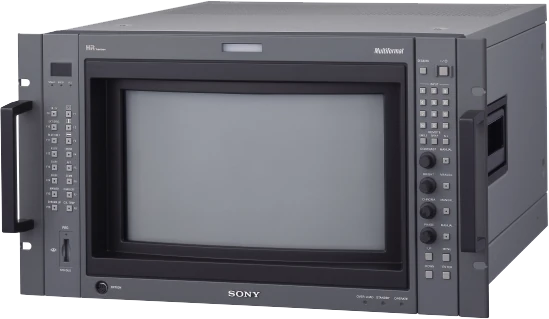
Every great saga needs a finale, and the A-series is how Sony's CRT story ends: one final generation, built with everything the company had learned, released into a world already turning to flat panels. The A14F5U is that finale in fourteen inches — the master-grade CRT perfected at the exact moment it became art.

It behaves like something from a later century. Beam landing correction and digital uniformity iron the image flat into the corners in a way no analog-era chassis can approach. A calibration probe hangs on the front of the glass and walks the white point to D65 by measurement rather than by eye. The monitor's entire personality — every setting, every trim — saves to a Memory Stick and travels with you.

The master-grade CRT, perfected at the exact moment it became art.

It was born to work in packs. Ethernet remote, addressing for a wall of thirty-two units, a control system designed for facilities that ran monitors the way server rooms run racks. In a home bay, all that engineering distills to one thing: total, casual command over a reference-grade picture.

And this one is done. All three option slots filled, the card set complete — SDI, HD, and an analog board that adds SCART, component and VGA beyond anything the factory ever offered. There is nothing left to hunt for it, which is a rare and specific pleasure in a hobby built on hunting. The A-series set is closed, and it closed at the top.

Resolution
800 TVL
Size (viewable)
14" (13" viewable)
Horizontal sync range
15–45 kHz
Grade / series
BVM-A broadcast, final CRT generation
Option slots
3 (61D installed; set complete)
Current draw
≈1.0–1.5 A @ 120 V est. (110–175 W class; A-series spec unverified)
Weight (approx)
~48 lb
Production era
~2003–2007
Picture9
Rarity8
Versatility9
Livability8
THE FINALE, PERFECTED.
Full specification — all 28 lines
Display
Technology
HR Trinitron CRT
Size (viewable)
14" (13" viewable)
Grade / series
BVM-A broadcast, final CRT generation
Native aspect
4:3 (16:9 switch)
Resolution
800 TVL
Tube / panel detail
0.25 mm-class AG pitch
Phosphors / color science
SMPTE-C (U spec; EBU on A14F5M)
Color temperature
D65 + user, BKM-14L auto probe, digital uniformity
Formats & sync
Supported formats
240p, 480i/p, 576i/p, 720p, 1080i, 1080/24PsF
Horizontal sync range
15–45 kHz
HD capable
Yes
240p handling
Native scan
Inputs & modularity
Composite
Via option boards
Y/C (S-Video)
Via BKM-61D (installed)
Analog RGB / component
Via BKM-68X (clone installed)
SD-SDI
Via BKM-61D (installed)
HD-SDI / 3G
Via BKM-62HS (owned)
HDMI
Option slots
3 (61D installed; set complete)
Control, power, physical
Control system
Built-in panel; Ethernet remote; Memory Stick setup save; RS-485 (32 monitors)
Power
AC only
Current draw
≈1.0–1.5 A @ 120 V est. (110–175 W class; A-series spec unverified)
Rack / mounting
19" EIA rack via MB kit
Weight (approx)
~48 lb
Production era
~2003–2007
Market
Desirability
Very high — last-generation 14" multiformat BVM
Notable quirks
Beam landing correction + digital uniformity; setup portable via Memory Stick
Role in your setup
SD+HD reference; AMS-100 stack
Trinitron Fleet · Vol.1 · Aug 2026 LMD support fleet Page 14
05 / 05

The Confidence Wall

LMD support fleet · four models, nine units
The Confidence Wall
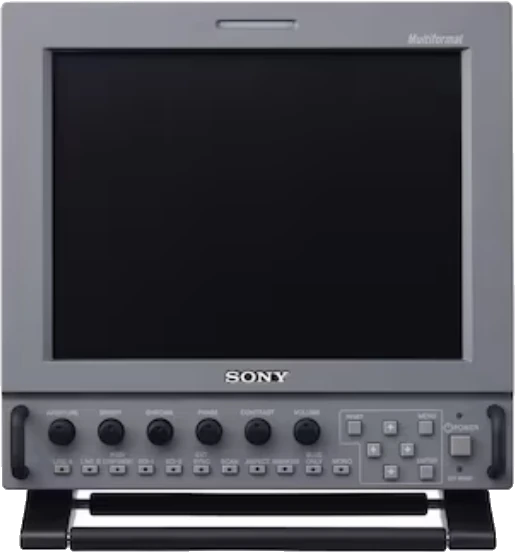
LMD-9030 — the 8.4″ chassis family

Behind the tubes stands mission control. Four LMD models, nine units, one job: keep every signal honest before it touches the glass that matters. Five 9030s form the wall, two 9050s extend it into HD, a 9020 holds the analog corner, and a lone 940W speaks every modern format down to HDMI.

Flip the wall on and the appeal is immediate — identical faces lighting in sequence, one instrument with nine eyes. The 8.4-inch family shares a chassis, a menu system and a single manual, so the whole array behaves like one machine with three signal grades. Run all of it at once and it still draws less power than the flagship CRT does alone.

Nine screens, one job: keep the signal honest before it reaches a tube.

The 940W is the future-proofing move: ChromaTRU color in 10-bit, one BNC that auto-detects everything from SD through 3G, HDMI for anything made this decade, waveform and audio meters built in, and a tally lamp up top — a broadcast truck condensed into four and a half pounds. In a collection built around glass, this is the crew that keeps the show running.

Models
LMD-940W · 9020 · 9030 ×5 · 9050 ×2
Panels
8.4″ XGA · 9″ wide WVGA
Signal reach
Analog SD → SD-SDI → HD-SDI → 3G + HDMI
Power per unit
25–30 W · AC / DC / battery
Weight per unit
4.4–7.1 lb
Rack format
Half-rack, two side by side
Manuals
One covers the 8.4″ family
Role
Confidence wall · modern-source bridge
Picture6
Rarity4
Versatility9
Livability10
THE CREW.
The four models, side by side
LMD-940W — 9" wide 3G LCD
Resolution
800×480 WVGA
SD-SDI
Standard (shared BNC)
HD-SDI / 3G
3G-SDI standard, auto-detect
HDMI
Yes
Weight (approx)
~4.4 lb
Role in your setup
Modern-source bridge (HDMI/3G)
LMD-9020 — 8.4" LCD
Resolution
1024×768 XGA
SD-SDI
HD-SDI / 3G
HDMI
Weight (approx)
~6.6 lb
Role in your setup
Utility/rack fill, analog confidence
LMD-9030 — 8.4" LCD + SDI
Resolution
1024×768 XGA
SD-SDI
Standard, in/out
HD-SDI / 3G
HDMI
Weight (approx)
~6.8 lb
Role in your setup
SD-SDI confidence wall (5 units)
LMD-9050 — 8.4" LCD + HD-SDI
Resolution
1024×768 XGA
SD-SDI
Standard
HD-SDI / 3G
HD-SDI standard
HDMI
Weight (approx)
~7.1 lb
Role in your setup
HD-SDI confidence monitors (2 units)
Trinitron Fleet · Vol.1 · Aug 2026 Departments Page 16

Ask the bay

“Why does 240p look sharper than 480i on the same monitor? Shouldn’t more lines win?”
— Counting Lines in Louisville
The bay says240p paints the same lines every pass, so each scanline sits still, fully lit, with black gaps that read as definition. 480i alternates half-frames sixty times a second — more information, but shimmering between two combs. Progressive stability beats interlaced quantity, which is why the sharpest thing a grail does is stand still.
“What does TVL actually measure? Is 1000 TVL like 1000p?”
— Static in Sacramento
The bay saysNot pixels — discernment. TVL counts how many alternating vertical lines the tube can keep separate across a width equal to the picture height. It is a measure of the glass and the grille, not the signal: feed two monitors the same 240p and the higher-TVL tube simply draws it with a finer pen.
“Is composite video really that bad? It was good enough for my childhood.”
— Yellow Cable Guy, Yuma
The bay saysComposite crams brightness and color down one wire and asks the monitor to untangle them — that shimmer on fine patterns is the untangling failing politely. S-Video separates the two; RGB never mixes anything at all. Your childhood was fine. Your childhood on RGB would have been a religious experience.
“My PVM makes a loud THUNK when it powers on. Should I be worried?”
— First-Time Tuber, Tustin
The bay saysThat is the degauss coil firing — a deliberate magnetic pulse that wipes the shadow mask clean of stray fields so the colors land pure. It is not a fault; it is the monitor clearing its throat. Worry on the day it stops.

Sources & notes

Sources: Sony PVM-2950Q/QM and LMD-905x operating manuals, Sony BVM E/F-series operation and BKM installation manuals, BVM-A series brochures, Sony 2002–2003 monitor line-up comparison guide, CRT Database, ConsoleMods. TVL figures are Sony's published center-resolution specs. BVM-20E1U current draw verified from unit rear label (200 W max); weight remains estimated. Current draw: sourced wattages are from Sony manuals and brochures; amp conversions assume 120 V AC, and entries marked “est.” are unverified. Chassis elevations are drawn from Sony cabinet dimensions at a single common scale; control layouts follow reference photography.

Orlandu’s Arcade
Private arcade & professional broadcast collection
Orange County, California

The full 28-line comparison table is omitted from the printed issue to keep it to one page per monitor. To print the complete data, switch the format control to Pamphlet or Spec sheet and print again. The Print control on the deck switches between full-color output and an ink-saving white layout.

Set in Orbitron and Rajdhani · Compiled August 2026 · An Orange County production · Best viewed at 15 kHz

01 / 08
PVM-2950Q
29" production
crt
Display
Technology
Super Trinitron CRT
Size (viewable)
29" (27" viewable)
Grade / series
PVM production
Native aspect
4:3 (16:9 mode)
Resolution
600 TVL
Tube / panel detail
AG pitch 0.7–0.85 mm, 110° deflection
Phosphors / color science
Standard P22
Color temperature
3200K / 6500K / 9300K
Formats & sync
Supported formats
NTSC / PAL / SECAM / NTSC 4.43, auto-select
Horizontal sync range
15 kHz only
HD capable
No
240p handling
Native scan, soft scanlines at 600 TVL
Inputs & modularity
Composite
2× with loop-through
Y/C (S-Video)
Yes
Analog RGB / component
RGB (BNC)
SD-SDI
HD-SDI / 3G
HDMI
Option slots
None — fixed inputs
Control, power, physical
Control system
Front panel + OSD; full digital geometry/convergence in service menu
Power
AC only
Current draw
3.7 A max @ 100–120 V (165 W typ ≈ 1.4 A)
Rack / mounting
Desktop cube, stackable
Weight (approx)
115 lb (52 kg, Sony spec)
Production era
~1991–1996
Market
Desirability
Very high — largest common PVM, "the cube," freight is the barrier
Notable quirks
Corner bracket screws back out into the cube chassis; all-digital convergence is best-in-PVM-class
Role in your setup
Big-screen 240p/consumer-era display
02 / 08
PVM-20L5
20" multiformat
crt
Display
Technology
HR Trinitron CRT
Size (viewable)
20" (19" viewable)
Grade / series
PVM production (top of line)
Native aspect
4:3 (16:9 switch)
Resolution
800 TVL
Tube / panel detail
Fine-pitch HR tube (shared flyback with 14L5 / BVM-D14H5)
Phosphors / color science
SMPTE-C
Color temperature
6500K / 9300K / user 3200–10000K
Formats & sync
Supported formats
240p, 480i/p, 576i/p, 1035i, 1080i, 720p
Horizontal sync range
15–33.75 kHz class multiscan
HD capable
Yes (analog + optional digital)
240p handling
Native scan, pronounced scanlines
Inputs & modularity
Composite
2× with loop-through
Y/C (S-Video)
Yes, loop-through
Analog RGB / component
1× RGB/component switchable, loop-through
SD-SDI
Optional (BKM-120D)
HD-SDI / 3G
Optional (BKM-142HD)
HDMI
Option slots
1 (BKM-120D / 142HD / 150CP / 155DV)
Control, power, physical
Control system
Front panel + OSD; parallel remote
Power
AC only
Current draw
≈1.5 A @ 120 V (180 W per Sony catalog)
Rack / mounting
Optional rack mount
Weight (approx)
~73 lb
Production era
~2002–2007
Market
Desirability
Very high — often called the king of PVMs; multiformat + 20"
Notable quirks
Early-serial D2 boards have 15 kHz H-linearity defect
Role in your setup
AMS-100 stack; multiformat bridge SD→HD
03 / 08
BVM-20E1U
20" 1000 TVL flagship
crt
Display
Technology
HR Trinitron CRT (E-grade tube)
Size (viewable)
20" (19" viewable)
Grade / series
BVM broadcast, E/F series — highest-resolution grade
Native aspect
4:3 (16:9 switch)
Resolution
1000 TVL — highest 4:3 Sony ever made at 20"
Tube / panel detail
M49LCB22X tube, ~0.25 mm AG pitch (finer than 20F1U's tube)
Phosphors / color science
SMPTE-C (U spec)
Color temperature
D65 + user, auto white balance via probe
Formats & sync
Supported formats
240p, 480i, 576i only — strictly SD by design
Horizontal sync range
15 kHz only
HD capable
No — never; no HD path exists
240p handling
Native scan — the definitive large-format 240p display; razor scanline definition at 1000 TVL
Inputs & modularity
Composite
Via E/F BKM decoder boards — owned BKM-21D covers it
Y/C (S-Video)
Via BKM-24N or BKM-27T (on the hunt list)
Analog RGB / component
1 fixed RGB/component + slots (fixed input block with loop-through)
SD-SDI
Optional (BKM-20D/21D — both owned)
HD-SDI / 3G
HDMI
Option slots
4 + fixed RGB input — full E/F 8-card family
Control, power, physical
Control system
Built-in panel; IC memory card; ISR/RS-485; optional BKM-10R remote
Power
AC only
Current draw
200 W max ≈ 1.7 A @ 120 V (per rear label, AC 100–120 V)
Rack / mounting
19" EIA rack via MB kit (20" size — not shared with 14" kits)
Weight (approx)
~85 lb est. (spec unverified)
Production era
~1995–2002 (E/F generation; low-volume E-tube)
Market
Desirability
Grail tier — only 20" 4:3 1000 TVL Sony ever built; extremely infrequent listings
Notable quirks
Strictly SD forever; M49LCB22X tube irreplaceable — protect the glass above all else; baseline tube health check (focus, landing, burn survey) recommended on arrival
Role in your setup
Flagship SD reference — maximum-resolution 240p/RGB display; sole E/F-series chassis; full eight-card adaptor family compatible
04 / 08
BVM-A14F5U
14" master grade
crt
Display
Technology
HR Trinitron CRT
Size (viewable)
14" (13" viewable)
Grade / series
BVM-A broadcast, final CRT generation
Native aspect
4:3 (16:9 switch)
Resolution
800 TVL
Tube / panel detail
0.25 mm-class AG pitch
Phosphors / color science
SMPTE-C (U spec; EBU on A14F5M)
Color temperature
D65 + user, BKM-14L auto probe, digital uniformity
Formats & sync
Supported formats
240p, 480i/p, 576i/p, 720p, 1080i, 1080/24PsF
Horizontal sync range
15–45 kHz
HD capable
Yes
240p handling
Native scan
Inputs & modularity
Composite
Via option boards
Y/C (S-Video)
Via BKM-61D (installed)
Analog RGB / component
Via BKM-68X (clone installed)
SD-SDI
Via BKM-61D (installed)
HD-SDI / 3G
Via BKM-62HS (owned)
HDMI
Option slots
3 (61D installed; set complete)
Control, power, physical
Control system
Built-in panel; Ethernet remote; Memory Stick setup save; RS-485 (32 monitors)
Power
AC only
Current draw
≈1.0–1.5 A @ 120 V est. (110–175 W class; A-series spec unverified)
Rack / mounting
19" EIA rack via MB kit
Weight (approx)
~48 lb
Production era
~2003–2007
Market
Desirability
Very high — last-generation 14" multiformat BVM
Notable quirks
Beam landing correction + digital uniformity; setup portable via Memory Stick
Role in your setup
SD+HD reference; AMS-100 stack
05 / 08
LMD-940W
9" wide 3G LCD
lcd
Display
Technology
TFT LCD (super-wide aperture)
Size (viewable)
9" widescreen
Grade / series
LMD high grade
Native aspect
16:9-class WVGA
Resolution
800×480 WVGA
Tube / panel detail
AR-coated, removable protection panel
Phosphors / color science
ChromaTRU (SMPTE/EBU/ITU emulation), 10-bit processing
Color temperature
9300K / 6500K / user
Formats & sync
Supported formats
Nearly all SD/HD incl. 1080/50p-60p via 3G
Horizontal sync range
Fixed-pixel, native scan mode
HD capable
Yes (3G/HD-SDI, HDMI)
240p handling
Motion-adaptive I/P conversion
Inputs & modularity
Composite
Yes, in/out
Y/C (S-Video)
No
Analog RGB / component
No analog component
SD-SDI
Standard (shared BNC)
HD-SDI / 3G
3G-SDI standard, auto-detect
HDMI
Yes
Option slots
None — all standard
Control, power, physical
Control system
Front panel; Ethernet + parallel remote; tally lamp; built-in WFM/audio meter
Power
AC 100V / DC 12V / battery adapter
Current draw
≈0.25 A AC (27 W max); ~2.3 A at DC 12 V
Rack / mounting
4U half-rack, MB-531 tilt bracket; 1/4" + 3/8" camera threads
Weight (approx)
~4.4 lb
Production era
~2011–2010s
Market
Desirability
Moderate — 3G + HDMI keeps it in working use
Notable quirks
SD/HD/3G share one auto-detecting BNC; camera-focus aperture assist
Role in your setup
Modern-source bridge (HDMI/3G)
06 / 08
LMD-9020
8.4" LCD
lcd
Display
Technology
TFT LCD
Size (viewable)
8.4"
Grade / series
LMD field/utility
Native aspect
4:3 (16:9 letterbox)
Resolution
1024×768 XGA
Tube / panel detail
AR-coated protective panel
Phosphors / color science
Factory LCD calibration
Color temperature
High / low / user
Formats & sync
Supported formats
SD analog: 480i/576i, 480p/576p component
Horizontal sync range
Fixed-pixel scaler
HD capable
No (SD only)
240p handling
Scaled/deinterlaced
Inputs & modularity
Composite
Yes
Y/C (S-Video)
Yes
Analog RGB / component
Component + RGB (525/625)
SD-SDI
HD-SDI / 3G
HDMI
Option slots
None
Control, power, physical
Control system
Front panel; parallel remote
Power
AC / DC / battery adapter
Current draw
≈0.25 A AC est. (~25 W class); ~2 A at DC 12 V
Rack / mounting
Half-rack, two side-by-side
Weight (approx)
~6.6 lb
Production era
~2005–2011
Market
Desirability
Low — utility LCD
Notable quirks
No SDI at all — verify before deploying in a digital chain
Role in your setup
Utility/rack fill, analog confidence
07 / 08
LMD-9030
8.4" LCD + SDI
lcd
Display
Technology
TFT LCD
Size (viewable)
8.4"
Grade / series
LMD field/utility
Native aspect
4:3 (16:9 letterbox)
Resolution
1024×768 XGA
Tube / panel detail
AR-coated protective panel
Phosphors / color science
Factory LCD calibration
Color temperature
High / low / user
Formats & sync
Supported formats
SD as 9020 + SD-SDI 480i/576i
Horizontal sync range
Fixed-pixel scaler
HD capable
No (SD only)
240p handling
Scaled/deinterlaced
Inputs & modularity
Composite
Yes
Y/C (S-Video)
Yes
Analog RGB / component
Component + RGB (525/625)
SD-SDI
Standard, in/out
HD-SDI / 3G
HDMI
Option slots
None
Control, power, physical
Control system
Front panel; parallel remote
Power
AC / DC / battery adapter
Current draw
≈0.25 A AC est. (~25 W class); ~2 A at DC 12 V
Rack / mounting
Half-rack, two side-by-side
Weight (approx)
~6.8 lb
Production era
~2005–2011
Market
Desirability
Low-moderate — SDI adds field value
Notable quirks
SD-SDI only; will not lock to HD feeds
Role in your setup
SD-SDI confidence wall (5 units)
08 / 08
LMD-9050
8.4" LCD + HD-SDI
lcd
Display
Technology
TFT LCD
Size (viewable)
8.4"
Grade / series
LMD field/utility
Native aspect
4:3 (16:9 letterbox)
Resolution
1024×768 XGA
Tube / panel detail
AR-coated protective panel
Phosphors / color science
Factory LCD calibration
Color temperature
High / low / user
Formats & sync
Supported formats
SD + HD via HD-SDI (720p, 1080i, PsF)
Horizontal sync range
Fixed-pixel scaler
HD capable
Yes (HD-SDI)
240p handling
Scaled/deinterlaced
Inputs & modularity
Composite
Yes
Y/C (S-Video)
Yes
Analog RGB / component
Component + RGB (525/625)
SD-SDI
Standard
HD-SDI / 3G
HD-SDI standard
HDMI
Option slots
None
Control, power, physical
Control system
Front panel; parallel remote
Power
AC / DC / battery adapter
Current draw
≈0.3 A AC est. (~30 W class); ~2.5 A at DC 12 V
Rack / mounting
Half-rack, two side-by-side
Weight (approx)
~7.1 lb
Production era
~2005–2011
Market
Desirability
Moderate — cheapest small Sony HD-SDI confidence monitor
Notable quirks
Same chassis family as 9020/9030 — manual covers all three
Role in your setup
HD-SDI confidence monitors (2 units)
PVM-2950Q29" production PVM-20L520" multiformat BVM-20E1U20" 1000 TVL flagship BVM-A14F5U14" master grade LMD-940W9" wide 3G LCD LMD-90208.4" LCD LMD-90308.4" LCD + SDI LMD-90508.4" LCD + HD-SDI
Display
TechnologySuper Trinitron CRTHR Trinitron CRTHR Trinitron CRT (E-grade tube)HR Trinitron CRTTFT LCD (super-wide aperture)TFT LCDTFT LCDTFT LCD
Size (viewable)29" (27" viewable)20" (19" viewable)20" (19" viewable)14" (13" viewable)9" widescreen8.4"8.4"8.4"
Grade / seriesPVM productionPVM production (top of line)BVM broadcast, E/F series — highest-resolution gradeBVM-A broadcast, final CRT generationLMD high gradeLMD field/utilityLMD field/utilityLMD field/utility
Native aspect4:3 (16:9 mode)4:3 (16:9 switch)4:3 (16:9 switch)4:3 (16:9 switch)16:9-class WVGA4:3 (16:9 letterbox)4:3 (16:9 letterbox)4:3 (16:9 letterbox)
Resolution600 TVL800 TVL1000 TVL — highest 4:3 Sony ever made at 20"800 TVL800×480 WVGA1024×768 XGA1024×768 XGA1024×768 XGA
Tube / panel detailAG pitch 0.7–0.85 mm, 110° deflectionFine-pitch HR tube (shared flyback with 14L5 / BVM-D14H5)M49LCB22X tube, ~0.25 mm AG pitch (finer than 20F1U's tube)0.25 mm-class AG pitchAR-coated, removable protection panelAR-coated protective panelAR-coated protective panelAR-coated protective panel
Phosphors / color scienceStandard P22SMPTE-CSMPTE-C (U spec)SMPTE-C (U spec; EBU on A14F5M)ChromaTRU (SMPTE/EBU/ITU emulation), 10-bit processingFactory LCD calibrationFactory LCD calibrationFactory LCD calibration
Color temperature3200K / 6500K / 9300K6500K / 9300K / user 3200–10000KD65 + user, auto white balance via probeD65 + user, BKM-14L auto probe, digital uniformity9300K / 6500K / userHigh / low / userHigh / low / userHigh / low / user
Formats & sync
Supported formatsNTSC / PAL / SECAM / NTSC 4.43, auto-select240p, 480i/p, 576i/p, 1035i, 1080i, 720p240p, 480i, 576i only — strictly SD by design240p, 480i/p, 576i/p, 720p, 1080i, 1080/24PsFNearly all SD/HD incl. 1080/50p-60p via 3GSD analog: 480i/576i, 480p/576p componentSD as 9020 + SD-SDI 480i/576iSD + HD via HD-SDI (720p, 1080i, PsF)
Horizontal sync range15 kHz only15–33.75 kHz class multiscan15 kHz only15–45 kHzFixed-pixel, native scan modeFixed-pixel scalerFixed-pixel scalerFixed-pixel scaler
HD capableNoYes (analog + optional digital)No — never; no HD path existsYesYes (3G/HD-SDI, HDMI)No (SD only)No (SD only)Yes (HD-SDI)
240p handlingNative scan, soft scanlines at 600 TVLNative scan, pronounced scanlinesNative scan — the definitive large-format 240p display; razor scanline definition at 1000 TVLNative scanMotion-adaptive I/P conversionScaled/deinterlacedScaled/deinterlacedScaled/deinterlaced
Inputs & modularity
Composite2× with loop-through2× with loop-throughVia E/F BKM decoder boards — owned BKM-21D covers itVia option boardsYes, in/outYesYesYes
Y/C (S-Video)YesYes, loop-throughVia BKM-24N or BKM-27T (on the hunt list)Via BKM-61D (installed)NoYesYesYes
Analog RGB / componentRGB (BNC)1× RGB/component switchable, loop-through1 fixed RGB/component + slots (fixed input block with loop-through)Via BKM-68X (clone installed)No analog componentComponent + RGB (525/625)Component + RGB (525/625)Component + RGB (525/625)
SD-SDIOptional (BKM-120D)Optional (BKM-20D/21D — both owned)Via BKM-61D (installed)Standard (shared BNC)Standard, in/outStandard
HD-SDI / 3GOptional (BKM-142HD)Via BKM-62HS (owned)3G-SDI standard, auto-detectHD-SDI standard
HDMIYes
Option slotsNone — fixed inputs1 (BKM-120D / 142HD / 150CP / 155DV)4 + fixed RGB input — full E/F 8-card family3 (61D installed; set complete)None — all standardNoneNoneNone
Control, power, physical
Control systemFront panel + OSD; full digital geometry/convergence in service menuFront panel + OSD; parallel remoteBuilt-in panel; IC memory card; ISR/RS-485; optional BKM-10R remoteBuilt-in panel; Ethernet remote; Memory Stick setup save; RS-485 (32 monitors)Front panel; Ethernet + parallel remote; tally lamp; built-in WFM/audio meterFront panel; parallel remoteFront panel; parallel remoteFront panel; parallel remote
PowerAC onlyAC onlyAC onlyAC onlyAC 100V / DC 12V / battery adapterAC / DC / battery adapterAC / DC / battery adapterAC / DC / battery adapter
Current draw3.7 A max @ 100–120 V (165 W typ ≈ 1.4 A)≈1.5 A @ 120 V (180 W per Sony catalog)200 W max ≈ 1.7 A @ 120 V (per rear label, AC 100–120 V)≈1.0–1.5 A @ 120 V est. (110–175 W class; A-series spec unverified)≈0.25 A AC (27 W max); ~2.3 A at DC 12 V≈0.25 A AC est. (~25 W class); ~2 A at DC 12 V≈0.25 A AC est. (~25 W class); ~2 A at DC 12 V≈0.3 A AC est. (~30 W class); ~2.5 A at DC 12 V
Rack / mountingDesktop cube, stackableOptional rack mount19" EIA rack via MB kit (20" size — not shared with 14" kits)19" EIA rack via MB kit4U half-rack, MB-531 tilt bracket; 1/4" + 3/8" camera threadsHalf-rack, two side-by-sideHalf-rack, two side-by-sideHalf-rack, two side-by-side
Weight (approx)115 lb (52 kg, Sony spec)~73 lb~85 lb est. (spec unverified)~48 lb~4.4 lb~6.6 lb~6.8 lb~7.1 lb
Production era~1991–1996~2002–2007~1995–2002 (E/F generation; low-volume E-tube)~2003–2007~2011–2010s~2005–2011~2005–2011~2005–2011
Market
DesirabilityVery high — largest common PVM, "the cube," freight is the barrierVery high — often called the king of PVMs; multiformat + 20"Grail tier — only 20" 4:3 1000 TVL Sony ever built; extremely infrequent listingsVery high — last-generation 14" multiformat BVMModerate — 3G + HDMI keeps it in working useLow — utility LCDLow-moderate — SDI adds field valueModerate — cheapest small Sony HD-SDI confidence monitor
Notable quirksCorner bracket screws back out into the cube chassis; all-digital convergence is best-in-PVM-classEarly-serial D2 boards have 15 kHz H-linearity defectStrictly SD forever; M49LCB22X tube irreplaceable — protect the glass above all else; baseline tube health check (focus, landing, burn survey) recommended on arrivalBeam landing correction + digital uniformity; setup portable via Memory StickSD/HD/3G share one auto-detecting BNC; camera-focus aperture assistNo SDI at all — verify before deploying in a digital chainSD-SDI only; will not lock to HD feedsSame chassis family as 9020/9030 — manual covers all three
Role in your setupBig-screen 240p/consumer-era displayAMS-100 stack; multiformat bridge SD→HDFlagship SD reference — maximum-resolution 240p/RGB display; sole E/F-series chassis; full eight-card adaptor family compatibleSD+HD reference; AMS-100 stackModern-source bridge (HDMI/3G)Utility/rack fill, analog confidenceSD-SDI confidence wall (5 units)HD-SDI confidence monitors (2 units)