The Consoles
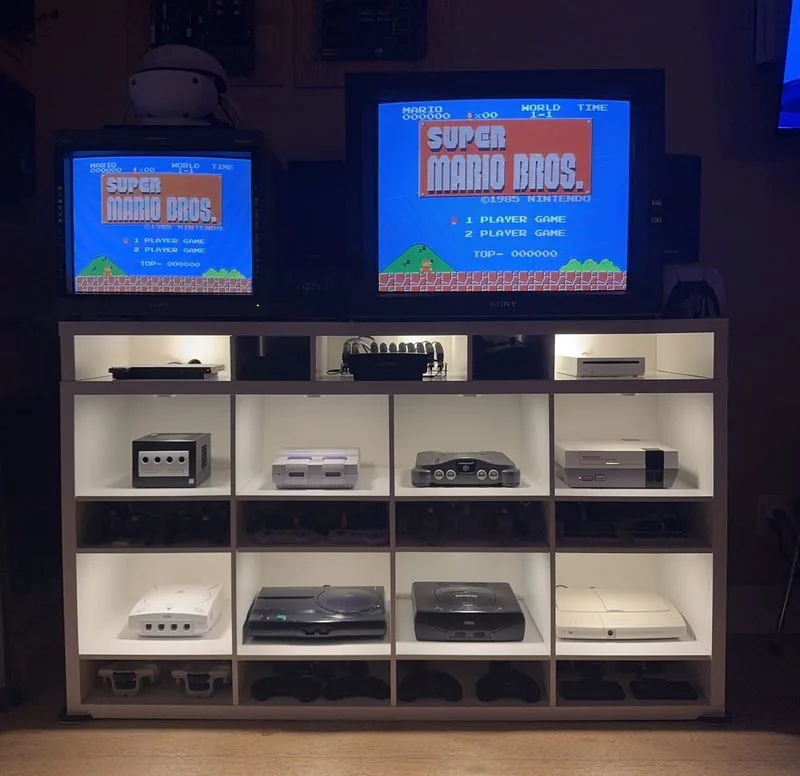
The home-console side of the collection — the machines that fed the CRTs before the cabinets moved in. More than a few wear RGB mods, so the Sony monitors get the signal they deserve.
Nintendo
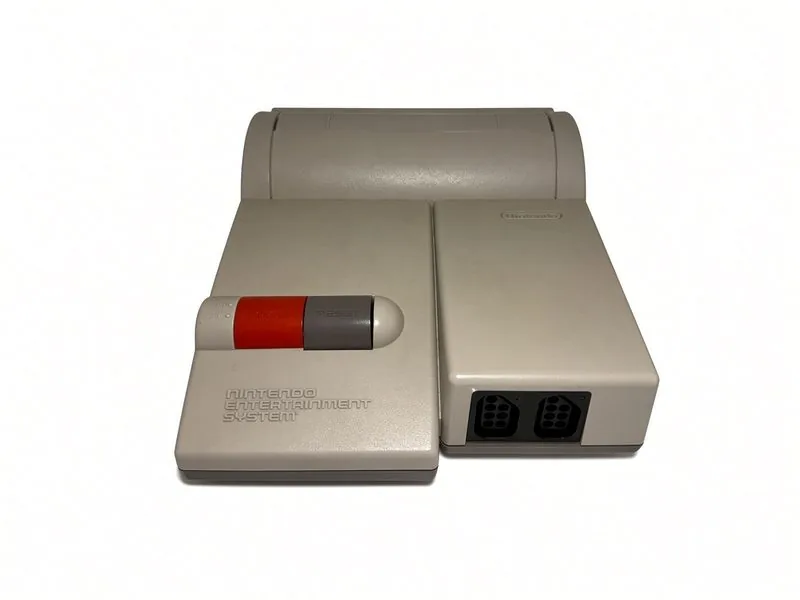
NES — Top Loader
The late-life redesign, upgraded with an NESRGB board — pure RGB out of a console that never officially had it.
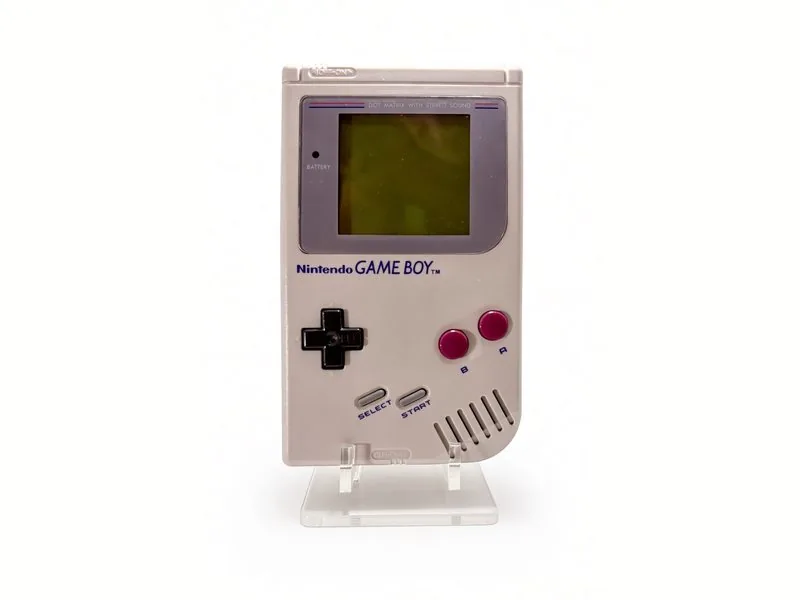
Game Boy — DMG-01
Launch-edition gray brick, the one that survived everything.
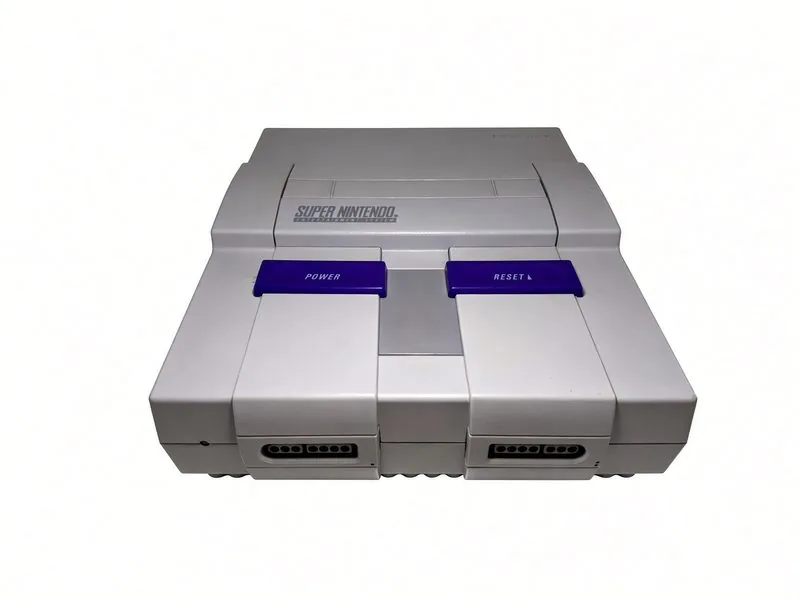
Super Nintendo
The 16-bit Nintendo — Mode 7 and the SPC700 sound chip.
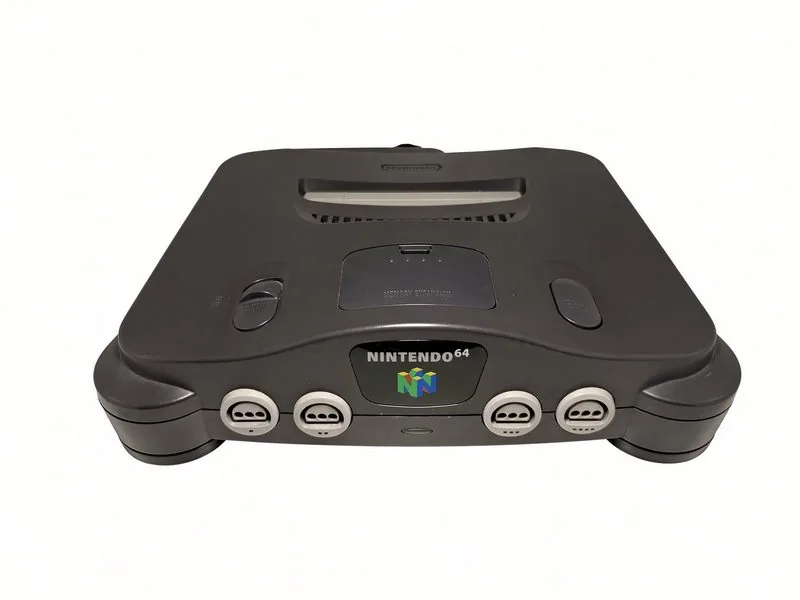
Nintendo 64
Fitted with an RGB upgrade — Mario 64 the way the arcade monitors want it.
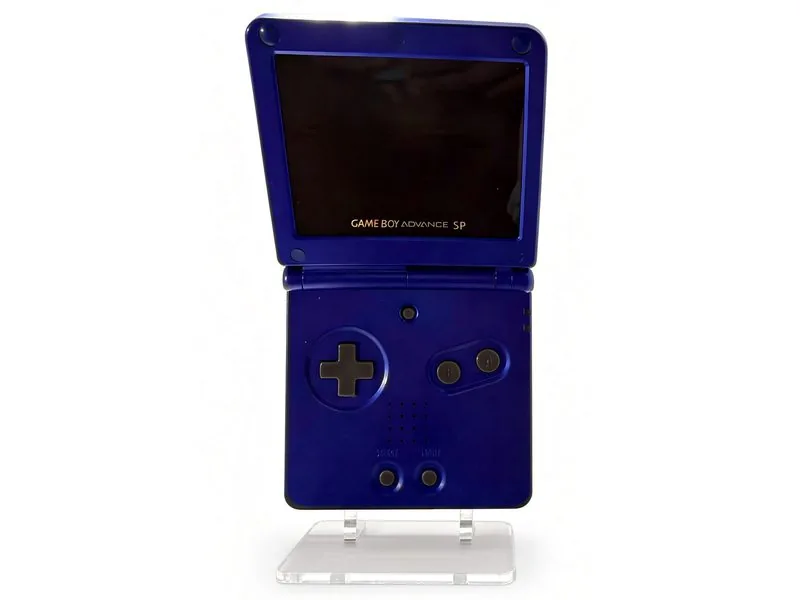
Game Boy Advance SP — Cobalt
The cobalt clamshell, upgraded from stock.
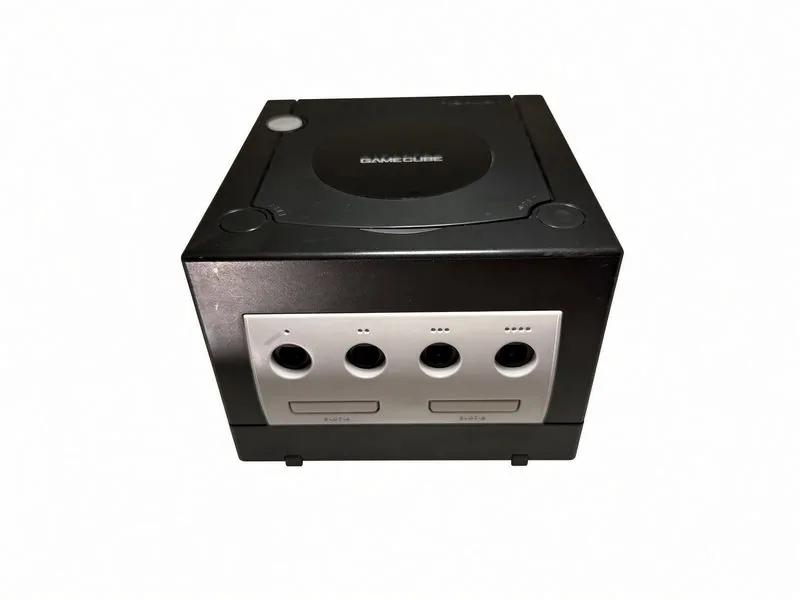
GameCube
The black edition, handle and all. Nintendo’s most carryable home console.
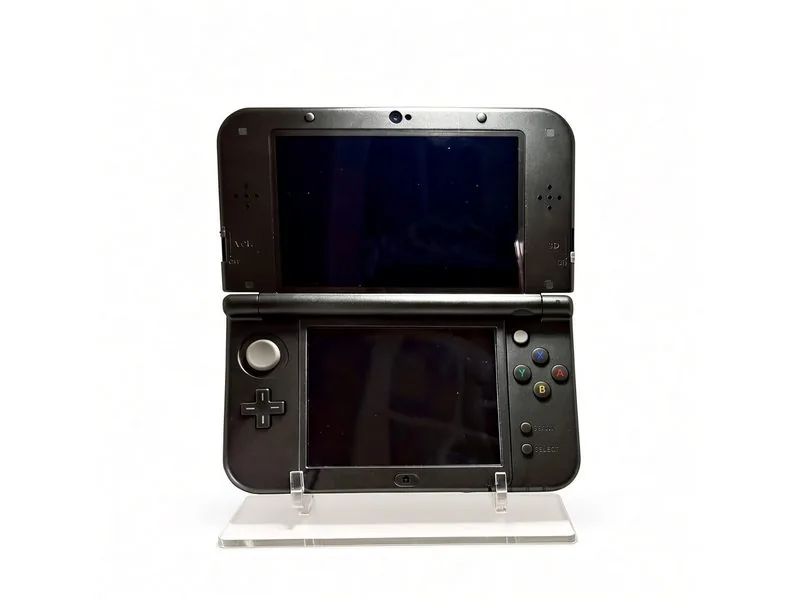
New 3DS XL — Black
The plain black clamshell, and the last of the two-screen Nintendo handhelds.
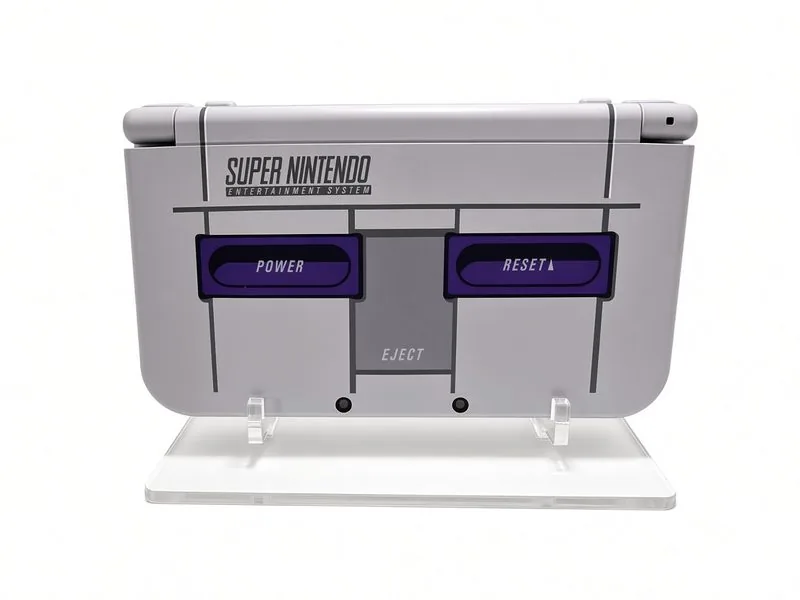
New 3DS XL — SNES Edition
The one that looks like a tiny Super Nintendo folded in half — purple buttons, gray shell and all.
Not pictured: the NES Front Loader (1985, fitted with an NESRGB board like the Top Loader) — not on the display shelf.
Sega
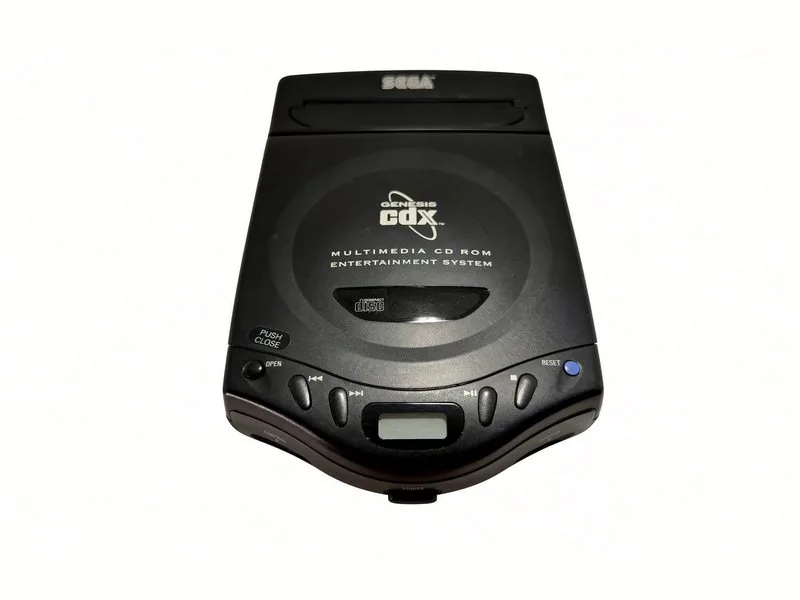
Genesis CDX
The slim Genesis/Sega CD combo (MK-4121), running strong on a freshly replaced laser lens.
JVC X'Eye
JVC's take on the Genesis + Sega CD combo — currently off at iFixRetro for a full servicing. Follow the bench →
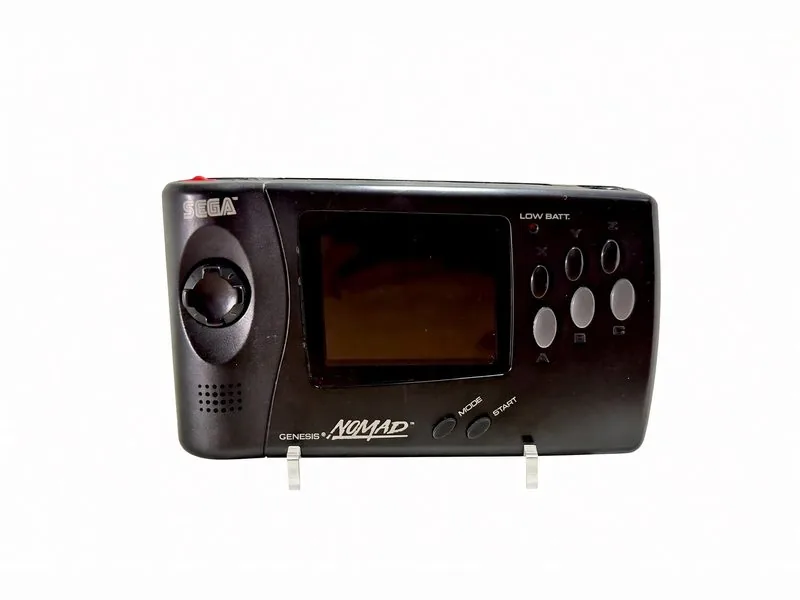
Nomad
Portable Genesis, batteries not sufficient.
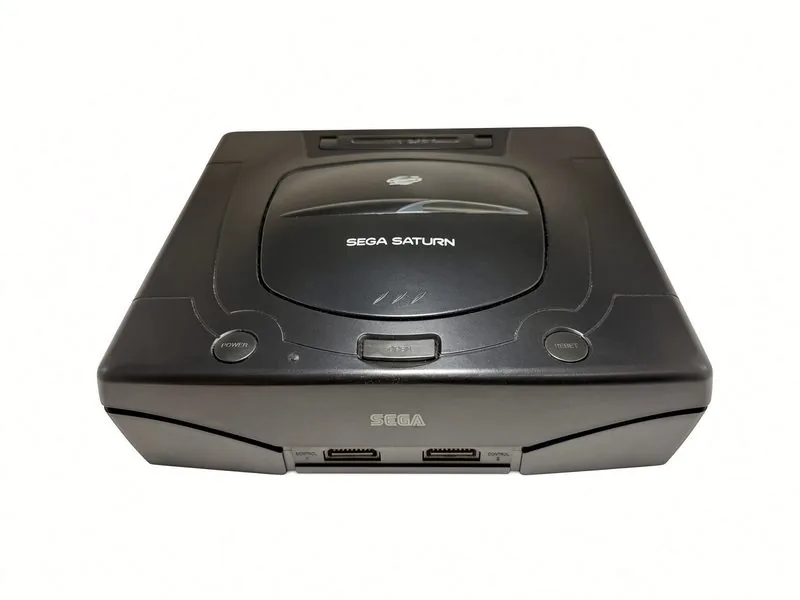
Saturn
Sega's 2D powerhouse and quiet legend.
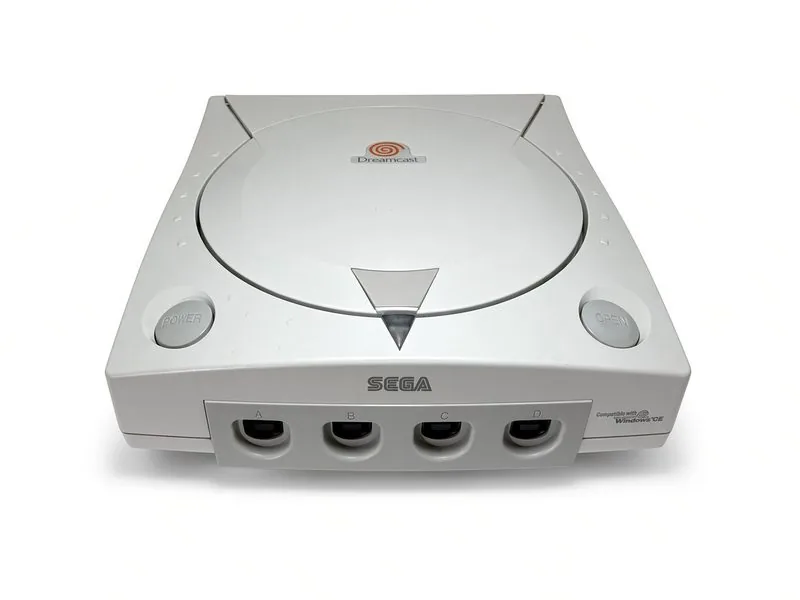
Dreamcast
The last Sega console, still thinking.
Not pictured: the Genesis Model 1 (1989, modded with HDG S-Video and stereo output jacks) — not on the display shelf.
NEC & Sony
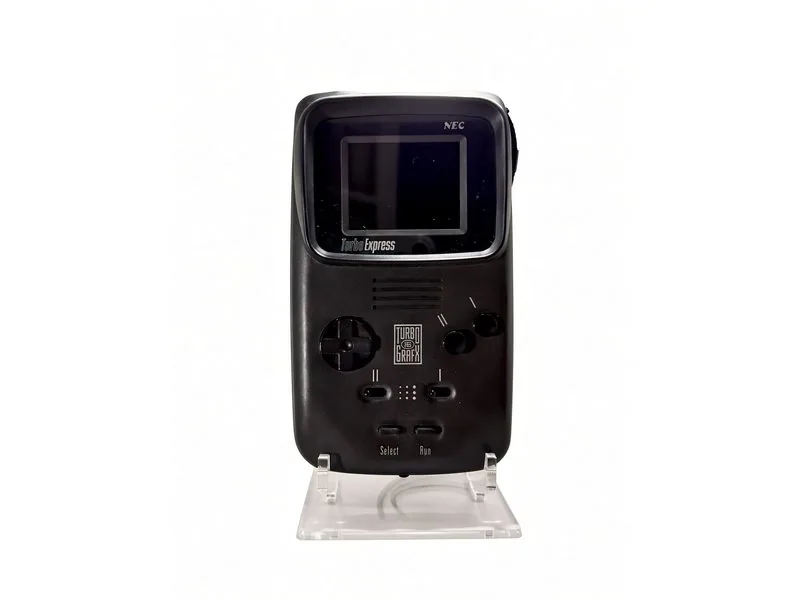
Turbo Express
Full TurboGrafx games in your hands — a handheld so far ahead of its moment it still looks unlikely.
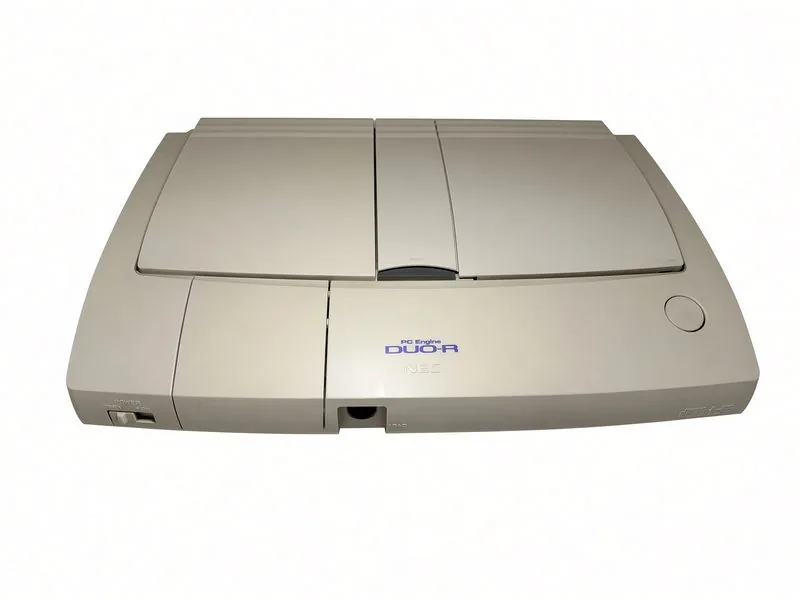
PC Engine Duo-R
PC Engine and CD-ROM² in one white machine, straight from the market that loved the PC Engine best — fitted with a region mod so it runs the US TurboGrafx library too, and an RGB mod so it reaches the monitors like everything else here.
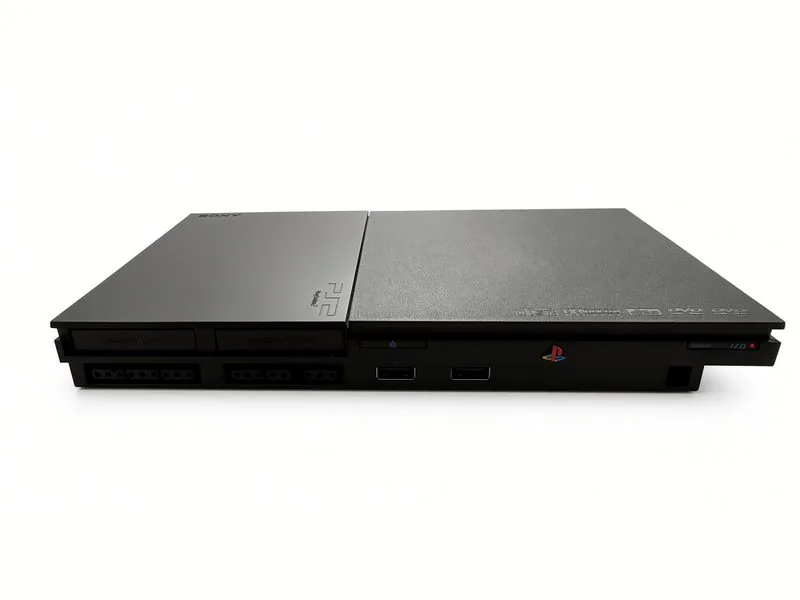
PlayStation 2 Slim
Runs its library from a MemCard Pro 2 with FMCB/OPL — the whole PS2 catalog, no discs required.
Not pictured: the TurboGrafx-16 (1989) — not on the display shelf.
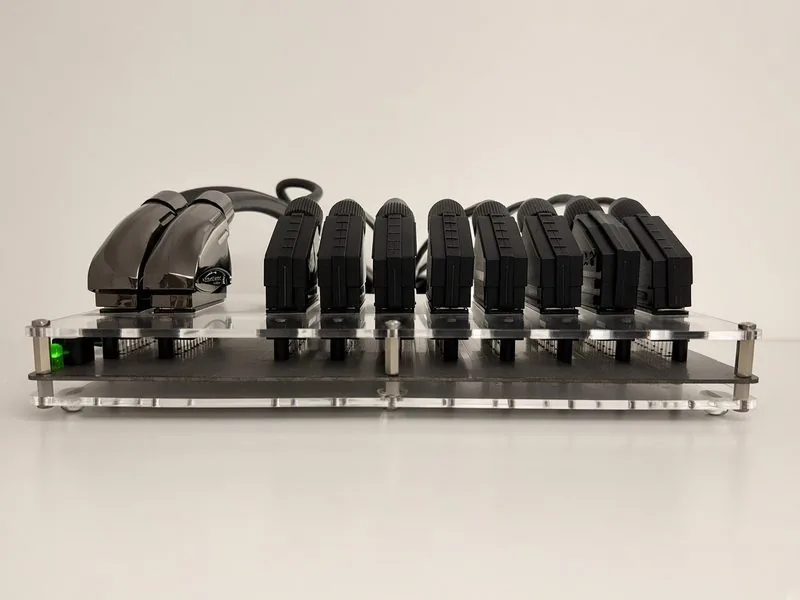
Every one of these reaches a CRT over analog RGB, through a pair of SCART switchers and a stack of BNC breakout cables. The Signal Chain shows the whole path.
What was done, and how it reaches the glass
The part every collector asks about: which machines needed a modification to give up RGB, which had it from the factory, and how each one lands on a professional monitor. The path is the same for nearly all of them — an RGB SCART cable into an auto-switcher, a SCART to 4 BNC breakout cable out of it, and a Sony BNC input at the end. Cable makers are left out on purpose; the gear is named.
| Console | Work done | Video out | Into the chain |
|---|---|---|---|
| NES Front Loader · Top Loader | NESRGB board in each | RGB (modded) | RGB SCART → switcher → breakout → PVM / BVM |
| Super Nintendo | Stock | RGB (native) | RGB SCART → switcher → breakout → PVM / BVM |
| Nintendo 64 | RGB upgrade | RGB (modded) | RGB SCART → switcher → breakout → PVM / BVM |
| GameCube | Stock | Component, OEM cable | Component input, no switcher in the path |
| Genesis Model 1 | HDG S-Video and stereo output jacks | RGB (native) · S-Video added | RGB SCART → switcher → breakout → PVM / BVM |
| Genesis CDX | New laser lens | RGB (native) | RGB SCART → switcher → breakout → PVM / BVM |
| Saturn | Stock | RGB (native) | RGB SCART → switcher → breakout → PVM / BVM |
| PC Engine Duo-R | Region mod · RGB mod | RGB (modded) | RGB SCART → switcher → breakout → PVM / BVM |
| PlayStation 2 Slim | MemCard Pro 2 with FMCB/OPL | Component | Switcher → distribution amp → the LMD wall |
Handhelds, the unit on the bench, and anything that does not run through the RGB chain are left off. “Switcher” is the GSCARTSW in each room; “breakout” is the SCART to 4 BNC cable. The whole path, box by box, is in The Signal Chain.